
If you’ve been following the news, you’re probably aware that climate change is becoming an increasingly serious issue with record-breaking temperatures. As solutions are explored to combat this growing crisis, an unexpected proposal is gaining attention: growing cannabis. Cannabis plants are known for their ability to absorb carbon dioxide, which could potentially help reduce greenhouse gases. Additionally, hemp, a species of cannabis, can be used to make eco-friendly products like biodegradable plastics and textiles, providing a sustainable alternative to traditional materials. In this article, we explore how growing cannabis can play a unique role in mitigating climate change.

What is climate change?
Climate change refers to long-term changes in temperatures and weather patterns. These changes can occur naturally due to factors such as changes in solar activity or large volcanic eruptions. However, since the 1800th century, human activities have become the dominant driver of climate change , particularly through the burning of fossil fuels such as coal, oil and gas. The burning of these fuels generates greenhouse gases, which trap heat in the Earth's atmosphere like a blanket, causing global temperatures to rise.
The two main greenhouse gases responsible for climate change are carbon dioxide (CO2) and methane (CH4). These gases are released into the atmosphere through activities such as driving cars, heating buildings with coal, and clearing forests, also known as deforestation. Agriculture, especially livestock farming, and oil and gas extraction are significant sources of methane emissions. Other important sectors contributing to greenhouse gas emissions include energy production, industry, transport, buildings, and land use. These activities are directly linked to the increasing concentrations of greenhouse gases in the atmosphere, which in turn drive global warming.
Over the past two centuries, human activities have led to an increase in greenhouse gas emissions, causing the Earth's temperature to rise at an unprecedented rate. The current rate of warming is faster than at any time in at least the past 2.000 years. The Earth's average surface temperature is now about 1,2°C warmer than it was in the late 1800s, before the Industrial Revolution. This is the warmest the planet has been in over 100.000 years, and the last decade (2011-2020) was the warmest on record. Each of the past four decades has had higher temperatures than any previous decade since 1850.
Focus on your health and the health of the planet when you try CBDanmark products.
While many people primarily associate climate change with warmer temperatures, the problem is much more complex. The Earth functions as an interconnected system, meaning that changes in one area can have a ripple effect on the entire environment. The consequences of climate change extend beyond just temperature increases. As global temperatures rise, a wide range of other environmental impacts arise, such as more intense and frequent droughts, increased water scarcity, devastating wildfires, rising sea levels, flooding and melting polar ice caps. These changes also contribute to the decline in biodiversity as ecosystems struggle to adapt to the rapid changes in their environment.
As climate change is an urgent global issue driven by human activities, particularly the burning of fossil fuels, it is also our responsibility to reverse the consequences of our actions as much as possible. These consequences are far-reaching and interconnected, affecting everything from weather patterns to biodiversity. Immediate action is needed to reduce greenhouse gas emissions and mitigate the consequences of climate change for the planet and all its inhabitants, not just humans.

Environmental benefits of cannabis
You’re probably already aware of the health benefits of cannabis, especially its non-psychoactive component, CBD . With positive effects like stress relief, improved sleep, pain relief, and more, cannabis products come in a variety of forms like oils , capsules , and powders . You’ve probably already tried one or more of these CBD products . But did you know that cannabis can also improve the health of our planet? Hemp, a variety of cannabis, is environmentally friendly and requires fewer pesticides and less water than other crops. It can also help regenerate the soil, reduce carbon footprints, and provide sustainable materials for various industries. The possibilities are endless.
- Cannabis helps cleanse the soil naturally
Soil pollution is a pressing environmental problem worldwide, often caused by the buildup of pesticides, fertilizers, and other harmful chemicals from industrial agriculture. In addition, heavy metals and pollutants from factories and landfills leach into the soil, making it unsafe for growing food and other crops. However, research has shown that cannabis, especially hemp, can play an important role in solving this problem through a process called phytoremediation. Phytoremediation refers to the ability of plants to absorb and neutralize pollutants in the soil. The term gained attention when hemp was planted around the Chernobyl nuclear disaster to reduce soil toxicity. In Italy , farmers have successfully used hemp to combat soil contamination in the region. Studies have shown that hemp is particularly effective at pulling heavy metals such as lead, cadmium, and nickel out of contaminated soil and storing them in its tissue. This ability makes hemp an invaluable tool for cleaning up contaminated environments. As soil health is crucial to global food production and ecological balance, cannabis could become a key player in restoring soil vitality. Hemp's potential to detoxify soil and promote sustainability is an exciting opportunity for both environmental remediation and agricultural innovation.
- Cannabis reduces carbon dioxide in the atmosphere more effectively than forests
Carbon dioxide (CO2) is a major cause of global warming, but the cannabis plant, especially hemp, has proven to be a powerful tool in the fight against climate change. Research has shown that hemp absorbs more CO2 per hectare than both forests and most commercial crops. This makes hemp a prime candidate for carbon sequestration, a process in which plants capture CO2 from the atmosphere and store it in the soil. Hemp grows quickly and thrives in nutrient-poor soil with minimal water and no need for chemical fertilizers, making it one of the most efficient CO2 converters on Earth. While there is widespread discussion about planting more trees to mitigate climate change, hemp may offer a better solution. Hemp is one of the fastest growing plants , reaching a height of up to 4 meters in just 100 days. This rapid growth allows it to absorb CO2 at an extraordinary rate. In fact, one hectare of hemp can absorb between 8 and 22 tons of CO2 per year – more than any forest area of comparable size. Due to its impressive CO2 absorption capacity, hemp can play a crucial role in reducing atmospheric CO2 and combating global warming, making it an important component of sustainable environmental practices.
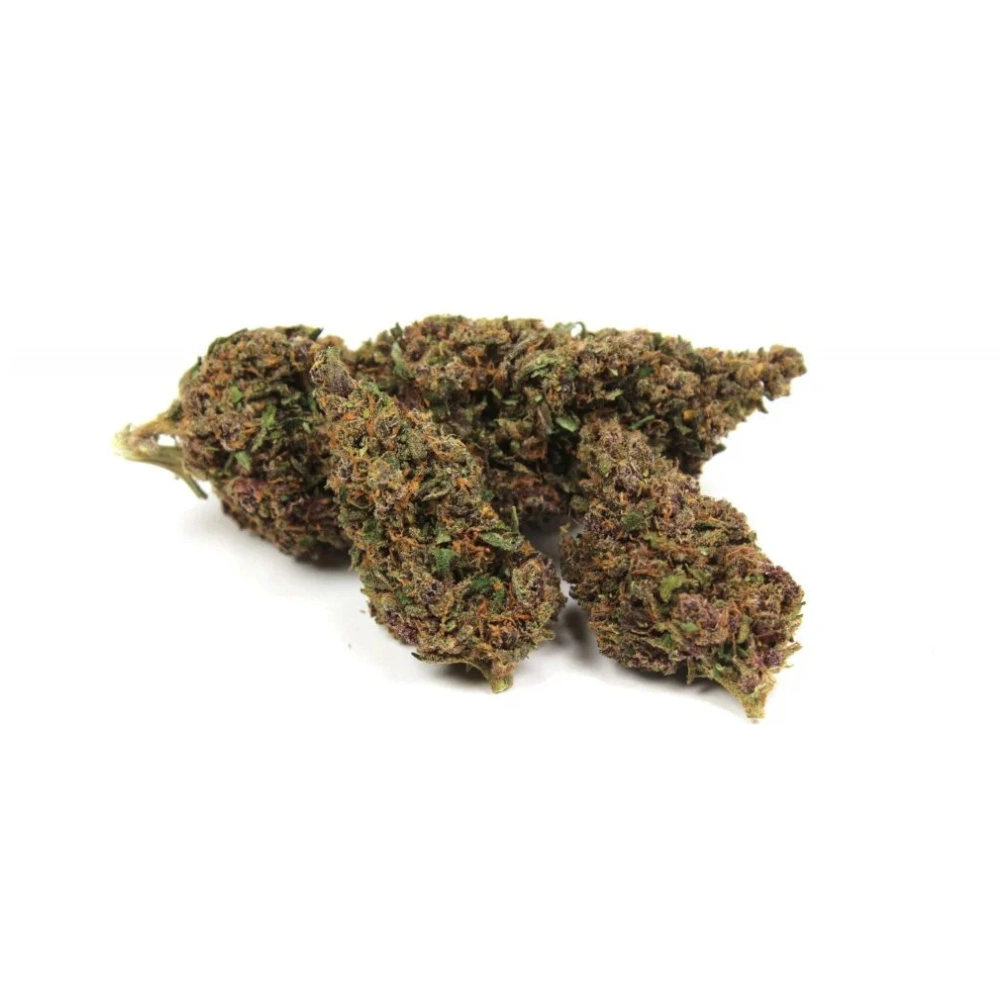
Black Zkittles – CBD Top Shot 14%
- Cannabis can be used as a renewable biofuel
Reducing the world’s dependence on fossil fuels is one of the most critical challenges we face today. Cannabis, especially industrial hemp, could be an important solution for creating renewable biofuels, or biodiesel. Researchers at the University of Connecticut have discovered that hemp has properties that make it an ideal feedstock for sustainable biofuel production. The study showed that hemp biodiesel has a high conversion efficiency, with 97% of the hemp oil converted to biodiesel. In addition, it can be used at lower temperatures than current biodiesel options. Compared to other biofuel sources such as sugar beet, palm oil and corn, hemp biofuel is also considered to be more environmentally friendly to produce. This makes hemp an attractive alternative to traditional fossil fuels. In our continued search for cleaner energy sources, hemp biofuel could be a promising, sustainable option. With its potential for efficient conversion and minimal environmental impact, the future of cannabis as a renewable energy source may be closer than we think. Will we one day power our cars with biodiesel derived from cannabis? Time will tell, but the possibilities are certainly worth exploring.
At CBDanmark, our CBD products are organic and free of pesticides.
- Cannabis is a more sustainable choice for paper and fabric production
Hemp is a fast-growing alternative to trees for paper production, reaching maturity in about four months compared to the 20-80 years it can take for trees to grow. One hectare of hemp can produce as much paper as 4-10 hectares of trees over a 20-year cycle. An estimated 68 million trees are cut down each year to make paper products, contributing to deforestation and having a negative impact on the environment. By using hemp for paper, we can significantly reduce this impact. Hemp paper is also more sustainable than wood-based paper: it can be recycled up to eight times compared to only three times for traditional paper. In addition, hemp requires less water and fewer chemicals in the production process, making it a more environmentally friendly option. By switching to hemp paper, we can help preserve forests, reduce pollution and create a more sustainable paper industry. With these benefits, hemp can play an important role in changing the way we produce and consume paper.
In addition, the clothing industry contributes to around 10% of global CO2 emissions, depletes water sources and pollutes rivers. Furthermore, 87% of clothing ends up in landfills . Hemp, which has been used as a fabric for over 10.000 years, is a sustainable alternative. Due to global restrictions on cannabis, hemp production has largely declined in the last 50 years. However, hemp fabric is 100% biodegradable, making it an environmentally friendly choice. It is also very durable and becomes softer with each wash, providing long-lasting comfort. Hemp has three times the tensile strength of cotton, making it one of the strongest natural fibers. Hemp also requires less than a third of the water used for cotton and produces 220% more fiber. By using hemp for clothing production, we can reduce environmental damage, save water and promote a more sustainable textile industry. Hemp is a promising solution to both the environmental and waste problems of traditional clothing production.

Sustainable cannabis – how to avoid concerns about cannabis farming
Agriculture is a major source of pollution in many countries, with pesticides, fertilizers, and toxic chemicals contaminating water, air, soil, and marine ecosystems. These pollutants can remain in the environment for generations, causing long-term damage. But growing cannabis offers an opportunity to avoid these harmful practices. By using organic farming methods and sustainable agricultural techniques, cannabis can be grown without the use of harmful chemicals. Hemp, in particular, thrives in nutrient-poor soil and requires minimal water and fertilizer, reducing its environmental impact. Sustainable cannabis cultivation can serve as a model for more environmentally friendly farming practices worldwide:
- Water consumption
One of the biggest environmental concerns associated with cannabis cultivation is water consumption. Cannabis plants can require large amounts of water when grown in large quantities for commercial sale, which can strain local water resources, especially in regions with limited water supplies. However, by using water-efficient irrigation systems, such as drip irrigation or automatic moisture monitoring, growers can significantly reduce water use. These methods help minimize the strain on local water supplies and lower long-term operating costs. With sustainable water management practices, cannabis cultivation can become more environmentally responsible and ensure that it meets the growing demand of the legal cannabis industry without compromising essential water resources.
- Energy consumption
Energy consumption is a major issue, especially in indoor cannabis cultivation, which requires extensive use of artificial lighting, ventilation and temperature control to ensure that the quality of the cannabis being grown does not deteriorate. These systems use a lot of electricity, which leads to increased greenhouse gas emissions. The solution lies in using renewable energy sources such as solar or wind power, along with energy-efficient technologies such as LED lighting and automated climate control systems. These improvements can significantly reduce the carbon footprint of cannabis cultivation. In addition, expanding agriculture to open fields, which rely on natural sunlight and outdoor conditions, can further reduce energy needs and make cannabis production more sustainable and environmentally friendly.

- Use of pesticides and fertilizers
The use of pesticides and fertilizers in agriculture can harm local ecosystems and waterways and contribute to pollution. To mitigate this, cannabis growers can implement organic farming practices, such as using natural pest control methods and organic fertilizers. These methods include introducing natural predators such as ladybugs, lacewings, or predatory mites into the crops, which help control pest populations such as aphids or spider mites. Another method is to use neem oil. Neem oil comes from the neem tree and acts as a natural pesticide that deters and disrupts the life cycle of many pests. By using natural pest control techniques, farmers can reduce environmental damage and minimize the need for chemical pesticides. This practice reduces environmental impact by avoiding harmful chemicals that negatively affect ecosystems and by promoting soil health. In addition, organic farming can appeal to environmentally conscious consumers, who increasingly prefer products that are grown sustainably. By prioritizing organic methods, growers can help preserve local ecosystems, protect water quality, and support a growing demand for environmentally friendly cannabis products. This approach benefits both the planet and the consumer.
At CBDanmark, we understand the importance of prioritizing environmental awareness when producing our CBD products. We guarantee that our CBD products are organic and pesticide-free, so you have no doubt about what you are consuming or how it may be negatively contributing to the global climate crisis. By choosing CBDanmark for your cannabis product needs, you are not only prioritizing your own health, but also contributing to improving the health of the planet.
Works cited
“Agri-Environmental Indicator – Consumption of Pesticides.” Ec.europa.eu , ec.europa.eu/eurostat/statistics-explained/index.php?title=Agri-environmental_indicator_-_consumption_of_pesticides.
Brar, Kamalpreet Kaur, et al. “A Paradigm Shift towards Production of Sustainable Bioenergy and Advanced Products from Cannabis/Hemp Biomass in Canada.” Biomass Conversion and Biorefinery , 19 Mar. 2022, https://doi.org/10.1007/s13399-022-02570-6 . Accessed 10 June 2022.
Buckley, Christine. "Hemp Produces Viable Biodiesel, UConn Study Finds." UConn Today , Oct. 6 2010, today.uconn.edu/2010/10/hemp-produces-viable-biodiesel-uconn-study-finds/.
Doane, Seth. "Farmers in Italy Fight Soil Contamination with Cannabis - CBS News." Www.cbsnews.com , 12 Mar. 2017, www.cbsnews.com/news/cannabis-plant-soil-decontamination-italy-vincenzo-fornaro/.
“Facts about Hemp.” Cannabis Trades Association , www.cannabistrades.org/pages/126-facts-about-hemp.
Gill, William. “How Much Water Is Used for Farming & Agriculture?” Cool Farm Tool | an Online Greenhouse Gas, Water, and Biodiversity Calculator , 19 Nov. 2024, coolfarm.org/how-much-water-is-used-for-farming/.
“How Much Do Our Wardrobes Cost to the Environment?” The World Bank , 23 Sept. 2019, www.worldbank.org/en/news/feature/2019/09/23/costo-moda-medio-ambiente.
IPCC. “Climate Change Widespread, Rapid, and Intensifying.” The Intergovernmental Panel on Climate Change , 2021, www.ipcc.ch/2021/08/09/ar6-wg1-20210809-pr/.
—. Summary for All Climate Change 2021 . 12 Dec. 2022.
Luyckx, Marie. “Can Cannabis Clean up Europe's Soils?” UCLouvain , 2016, uclouvain.be/en/research/news/can-cannabis-clean-up-europe-s-soils.html . Accessed 14 Jan. 2025.
Michele, Agrotti. “Water Saving in Agriculture: Here's How to Limit Water Waste.” Www.forigo.it , www.forigo.it/en/news/water-saving-in-agriculture-heres-how-to-limit-water-waste.
Paris, Bass, et al. "Energy Use in Open-Field Agriculture in the EU: A Critical Review Recommending Energy Efficiency Measures and Renewable Energy Sources Adoption." Renewable and Sustainable Energy Reviews , vol. 158, Apr. 2022, p. 112098, https://doi.org/10.1016/j.rser.2022.112098.
Placido, Dante F., and Charles C. Lee. "Potential of Industrial Hemp for Phytoremediation of Heavy Metals." Plants , vol. 11, no. 5, 23 Feb. 2022, p. 595, https://doi.org/10.3390/plants11050595.
RR Ismagilov, and IA Rusakov. "Hemp (Cannabis Sativa L.) Is an Effective Carbon-Depositing Crop." BIO Web of Conferences , vol. 108, 1 Jan. 2024, pp. 10001–10001, https://doi.org/10.1051/bioconf/202410810001.
Saanich. “Alternatives to Pesticides.” Https://Www.saanich.ca , www.saanich.ca/EN/main/community/natural-environment/pesticide-reduction/alternatives-to-pesticides.html.
Singh, Anubhav et al. “Exploring the Potential of Industrial Hemp in Phytoremediation of Heavy Metals.” Natural Resources for Human Health , vol. 4, no. 1, 15 Dec. 2023, pp. 98–107, https://doi.org/10.53365/nrfhh/176819 . Accessed 2 Feb. 2024.
Tondo, Martina. “Producing Paper from Hemp – the Case of Hahnemühle Using Ancestry Old Process.” Lampoon Magazine , 4 Nov. 2024, lampoonmagazine.com/article/2024/11/04/paper-hemp-hahnemuhle-using-ancestry-old-process/ . Accessed 14 Jan. 2025.
United Nations. “What Is Climate Change?” United Nations , United Nations, 2023, www.un.org/en/climatechange/what-is-climate-change.
Vosper, James. The Role of Industrial Hemp in Carbon Farming.
World Meteorological Organization. “Climate Change Indicators Reached Record Levels in 2023: WMO.” World Meteorological Organization , World Meteorological Organization, 19 Mar. 2024, wmo.int/news/media-centre/climate-change-indicators-reached-record-levels-2023-wmo.
World Wildlife Fund. “Sustainable Agriculture.” World Wildlife Fund , World Wildlife Fund, 2019, www.worldwildlife.org/industries/sustainable-agriculture.